A National Historic Landmark Museum
"Where History and Humanitarianism Meet"
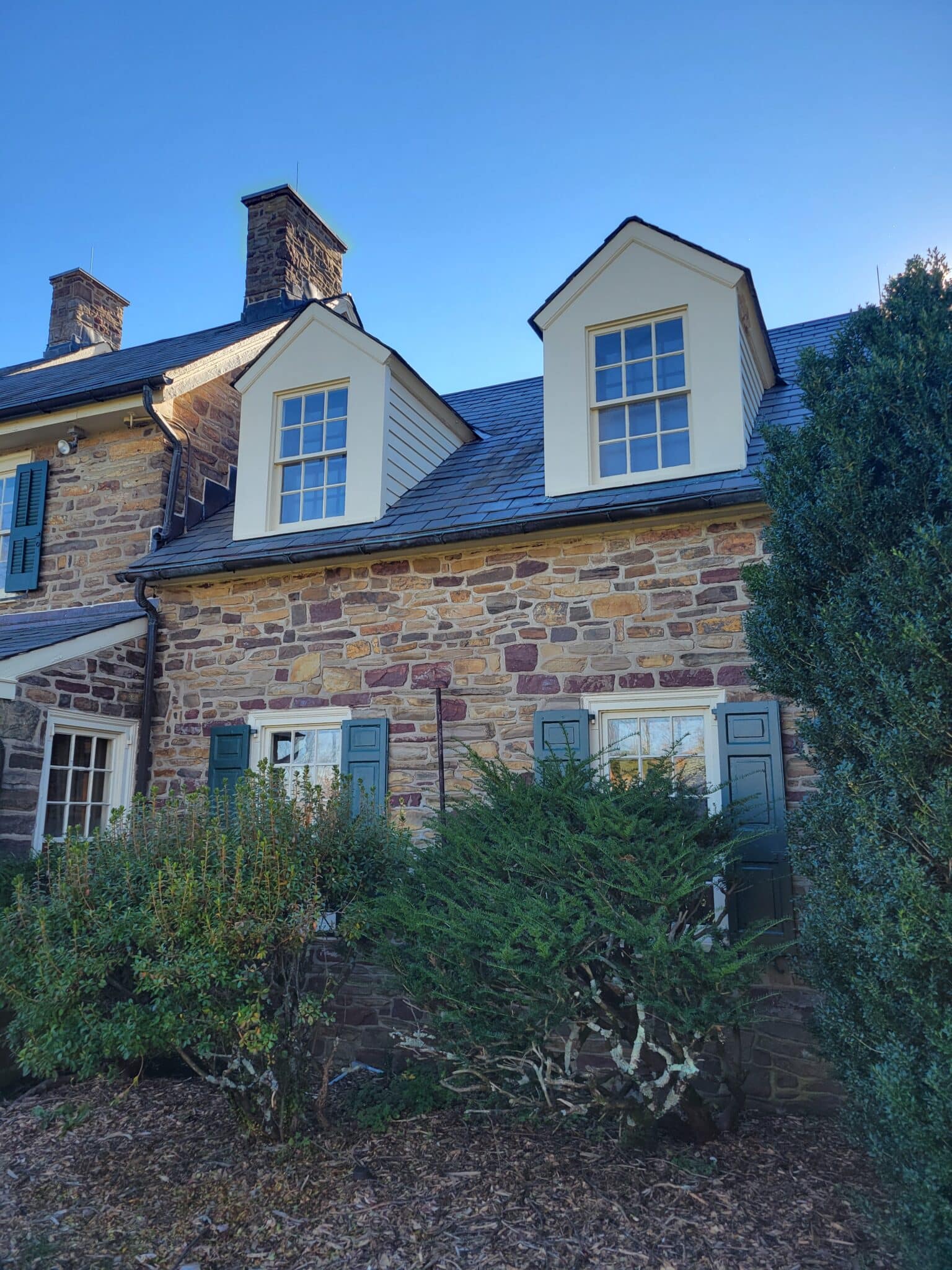
The Pearl S. Buck House, a National Historic Landmark museum in Bucks County, PA, was the home of Pearl S. Buck and her family. The beautiful and iconic Bucks County stone farmhouse contains a rich, intact collection from the extraordinary (the typewriter on which she wrote The Good Earth) to the ordinary (a closet full of board games her family played).
The grounds of the estate also contain Pearl S. Buck’s gravesite, Green Hills Farm Arboretum, greenhouses, award-winning gardens, Cultural Center (a former barn where Ms. Buck held community events), the Estate Pavilion (which houses special events and weddings), and the Welcome Center (which contains the International Gift Shop, the Exhibit Gallery, the Conference Conference and Event Center, and the offices of Pearl S. Buck International).
Mission of the Pearl S. Buck House
The Pearl S. Buck House will continue the legacy of Pearl S. Buck through preservation, interpretation, storytelling, and dialogue, linking the past to the present, to engage diverse audiences, while educating, inspiring, and empowering visitors to become active citizens and humanitarians.
Vision of the Pearl S. Buck House
The Pearl S. Buck House will inspire every visitor, through story and dialogue, to take action and make our world a better place.
Pearl S. Buck Research and Archives
Pearl S. Buck International not only possesses an extensive collection of historic artifacts on display inside the Pearl S. Buck House museum, it houses an extensive collection of papers, correspondences, articles, publications, photographs, and other items of historical and educational value in its archives. Research inquiries and requests from students, writers, and other researchers may be directed to Curator Samantha Freise at 215-249-0100 x149 or sfreise@pearlsbuck.org.
Collections Open For Research
Papers of Pearl S. Buck and Richard J. Walsh
The collection of papers of Pearl S. Buck and her husband, publisher and partner Richard J. Walsh document their literary, philanthropic and business endeavors spanning over 60 years, from about 1907 to the 1960s. The papers represent home office files, the editorial files of Asia Magazine for the time period when Richard J. Walsh served as editor, and the files of the East and West Association, which was active from 1942 to 1951. Some research restrictions apply.
Financial and Household Records of Pearl S. Buck and Richard J. Walsh
Records of Asia Magazine 1932-1947
The papers of Asia magazine are arranged in four series:
- Magazine issues (loose and bound copies)
- Editorial Correspondence (includes correspondence with authors, writers submitting manuscripts for consideration, and internal memos)
- Editorial Files (marked up typescripts, galley and page proofs for each monthly issue)
- Financial Records (account books and vouchers)
Records of the East and West Association 1941-1951
Papers were originally kept in four series:
- Alphabetical Correspondence: General correspondence, including correspondence with national organizations and key people, and all correspondence that did not relate to activities in state or local areas;
- Geographical Files: Working files, divided by state, relating to interest and activities at the local level;
- International Section: Correspondence with individuals and organizations abroad;
- Administrative Files: Subject files concerning the mechanics of the organization, departmental activities, plans, programs, finances;
- Ledgers and Account Books.
Papers of Lin Yutang 1933-1947
This series consists of correspondence between Lin Yutang, Richard J. Walsh, and Pearl S. Buck from 1933 until 1947. The papers were originally part of the editorial files of Asia Magazine and the John Day Company, but were removed from those files in the 1940s by Richard Walsh in order to compile a volume of letters of Lin Yutang for publication.
Katherine Linden Collection
The collection consists of five filmstrips, five booklets and a phonograph record of “Through China’s Gateway,” an educational series written and narrated by Pearl S. Buck for the East and West Association and produced by Telefilm Corporation in association with the editors of Look Magazine in 1947.
Peat Collection
The collection consists of letters, two photos albums, loose photographs and postcards from an American missionary family in China and Sumatra. There is no apparent connection between the Peats and the Sydenstricker family, however the photos show images of China from about the time Pearl S. Buck lived there. The Peats were Methodist missionaries who served in China and Sumatra from 1892 to about 1934. Jacob F. Peat (Feb. 26, 1867-July 28, 1957) was a circuit missionary, treasurer of the Board of Foreign Mission of the Methodist Episcopal Church, and later served as administrator of the General Hospital, Wuhu, Anhwei, China. Emily Peat (Nov. 26, 1869-Mar. 1, 1954) taught kindergarten in China. Letters in this collection are addressed from the Peats to their son, Dr. Harry Gaskill Peat, in Ohio.
Janice C. Walsh Collection
This collection contains the personal papers of Janice Comfort Walsh, daughter of Pearl S. Buck. The collection includes personal items, correspondence, and other personal papers.
Edythe M. Flower Collection
Edythe M. Flower was a missionary in China, ca. 1921-24 (and perhaps later).
The collection consists of a handwritten diary, dated September 1921 (but describing events back to June 1921) and ending Oct. 24, 1922, three photo albums depicting scenes of China, ca. 1920-24, and three loose photographs of Edythe Flower in her home in China during Christmas 1922.
Photos in the scrapbooks are arranged in a very loose chronological order. They depict scenes of rural life in China, Christian churches and evangelists, hospitals, famine.
Locations include views of the Mrs. Sarah Waters Memorial hospital (also known as the Tenghsien Leper Home in Shangdong Province), the Shadyside Hospital in China, and views of Peking.
Institutional Archive of Welcome House 1948-2014
This collection contains administrative documents, board correspondence and minutes, scrapbooks, newspaper clippings, and photographs. No adoption information is contained in this collection. All adoption records can be found at the Bucks County Orphan's Court.
Institutional Archive of Pearl S. Buck Foundation and Pearl S. Buck International 1964-Present
This collection contains administrative documents, board correspondence and minutes, scrapbooks, newspaper clippings, multimedia, and photographs related to PSBF and PSBI.
The collection also contains records for International Programs, Opportunity House, and Opportunity Center.
Pearl S. Buck House Restoration Campaign
Phase II
Now that the roof of our beloved historic house museum and National Historic Landmark has been repaired, our damaged artifacts are being restored, and work is set to begin in the new year to repair the interior ceiling damage, we need your help to begin the next phase of our campaign to restore and preserve the Pearl S. Buck House.
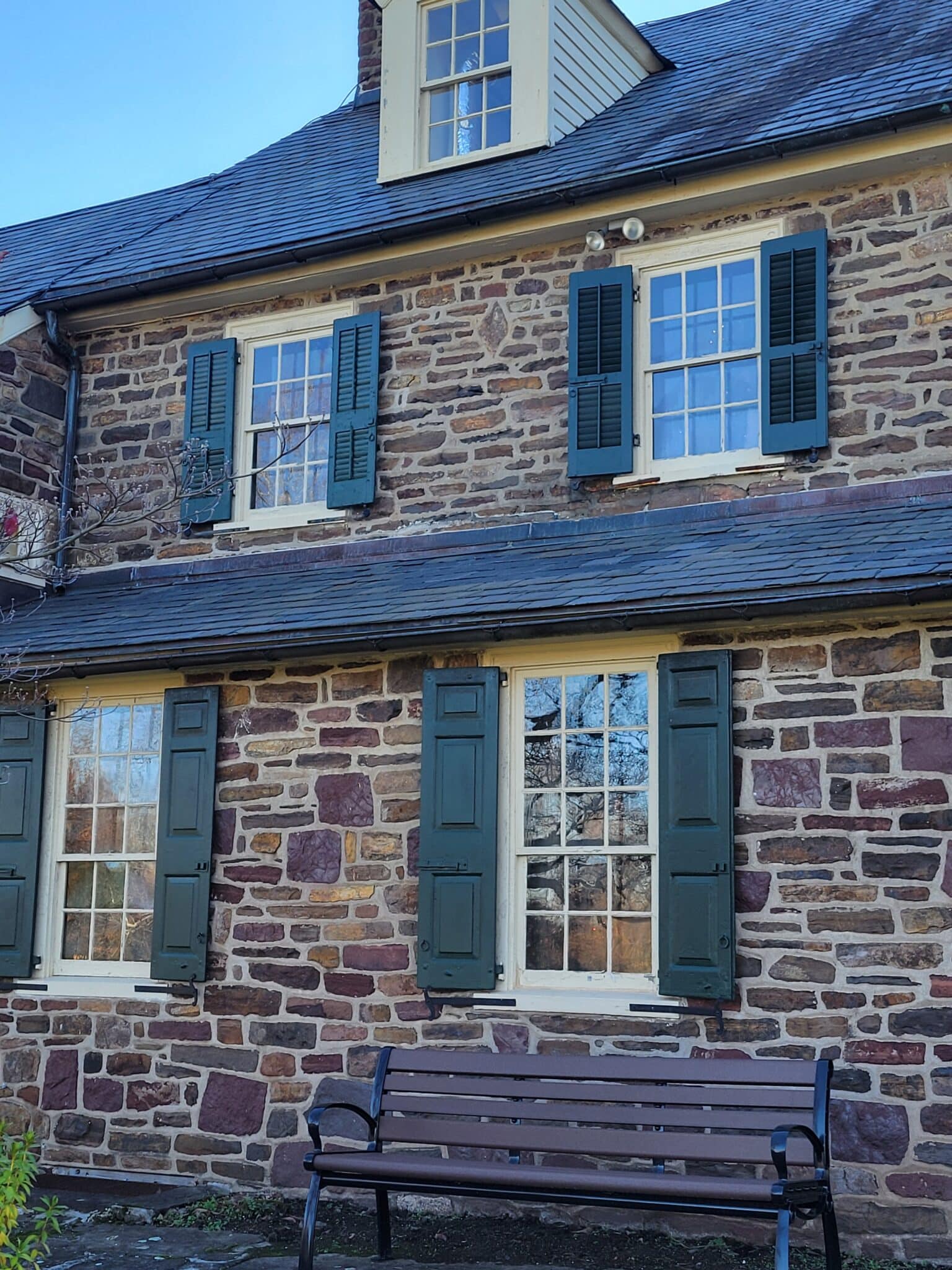
This next phase will focus on important repairs to the windows of the Pearl S. Buck House, including:
- Replacing rotting wood frames
- Repainting
- Masonry work around windows and doors
- Glass repair or replacement
- UV filters to protect the collection inside the house
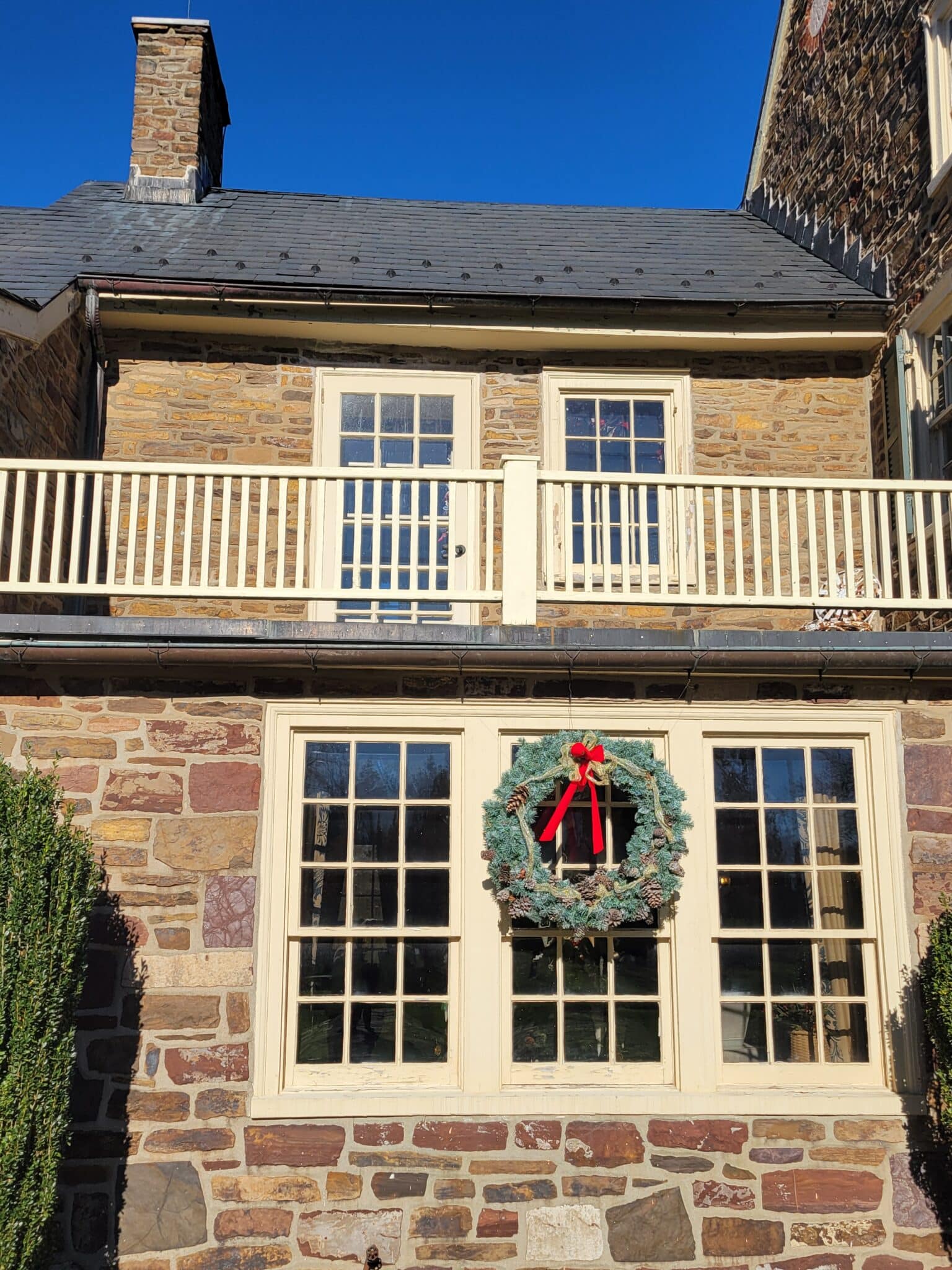
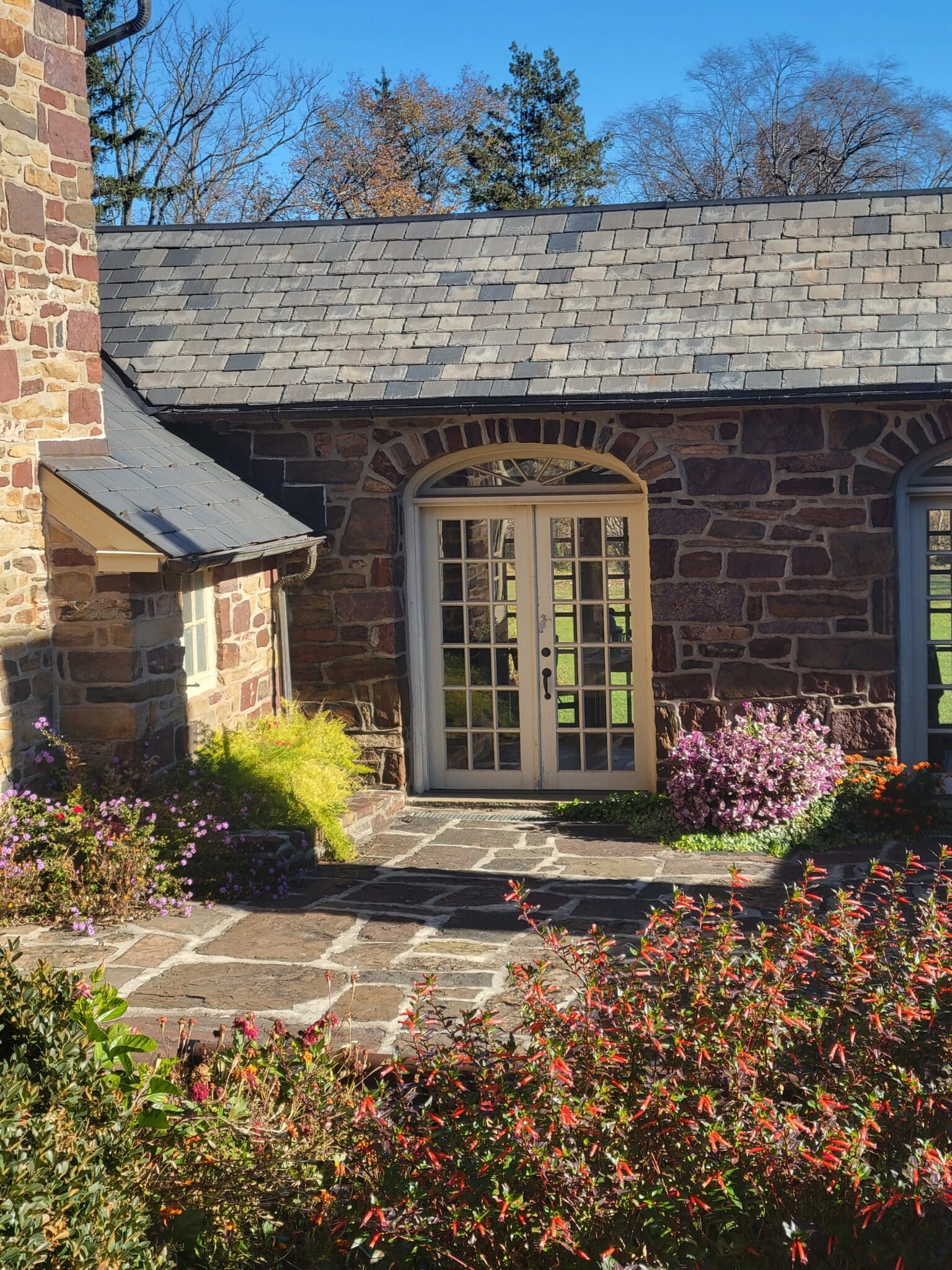
Our goal is to raise $40,000 to begin this next phase. There are almost 80 windows and 11 doors with windowpanes throughout the house, all in need of some degree of restoration. Parts of the historic wood and hardware are over 100 years old—some even older!—and ongoing restoration and repair are a part of the preservation of a building of this age. This second phase will ensure that a catastrophic urgent repair project like what happened with the roof can be averted in the future and keep our visitors, our artifacts and collection, and Pearl Buck’s legacy safe and secure.
Update from Pearl S. Buck House Curator Samantha Freise
Zoom meeting with docents, donors, and campaign supporters November 19, 2026